

Introduction
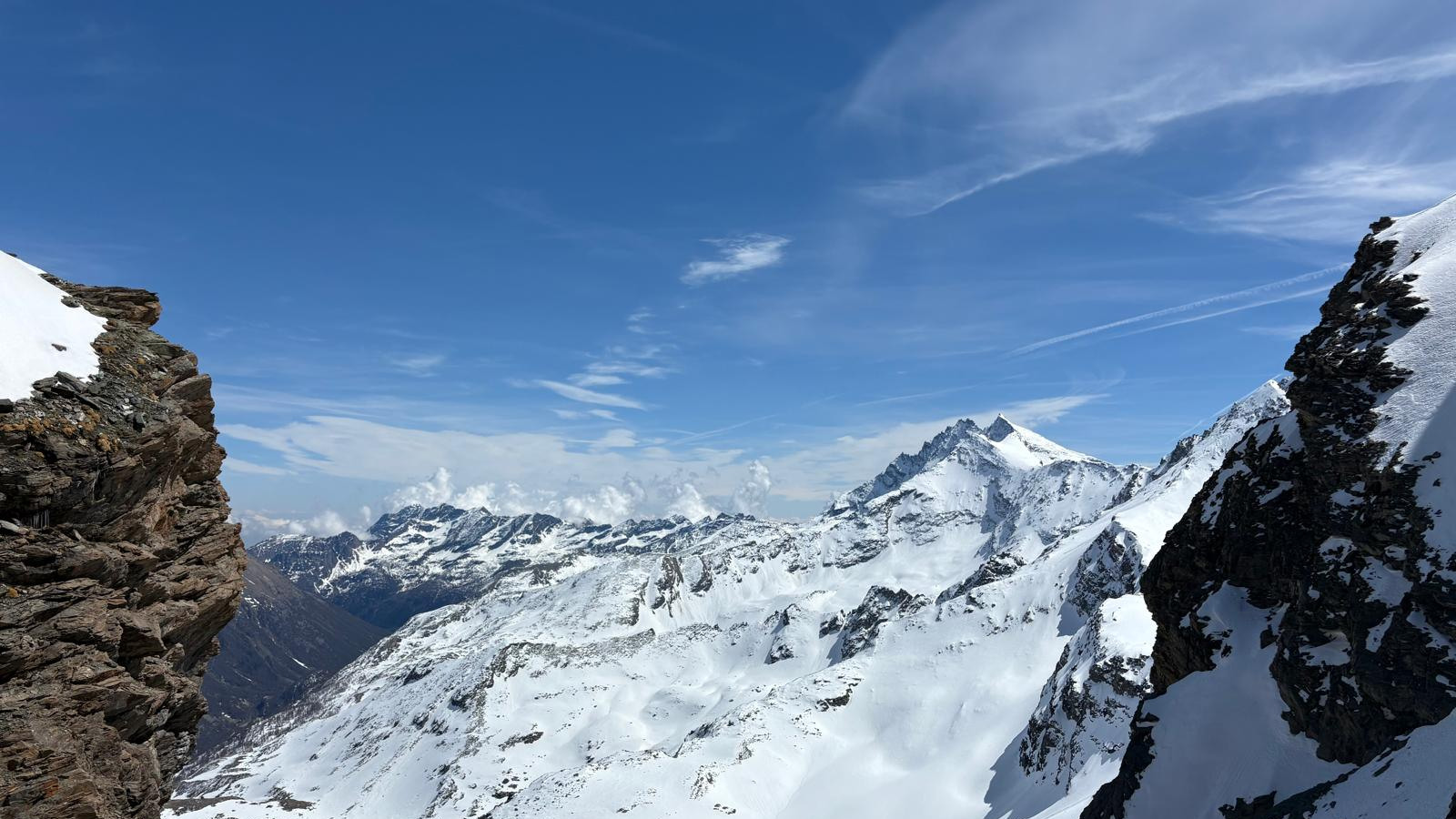
By spring, the mountain changes pace. The lifts wind down, the crowds thin out, and the days are long enough to start early and still be back with time to spare. For many ski tourers, this is when the Tarentaise is at its most rewarding.
From Val d’Isère and Tignes, spring touring is less about racing the light and more about choosing the right objective at the right time of day. It is a quieter way to ski, with more room, more choice and far fewer people on your line.
It is also a more affordable time to visit: accommodation is generally less expensive than in the middle of winter, and we can offer preferential rates on private outings.
Why spring suits ski touring
- Space. With the resort season over or winding down, the high terrain is much quieter. You are more likely to have a route to yourselves.
- Longer days. More daylight gives flexibility: an early start, a relaxed pace on the way up, and time to choose the best moment for the descent.
- Spring snow. The snow thaws through the day after freezing overnight, and on the right slope at the right hour the surface can become very pleasant to ski.
- A different kind of day. Spring touring is about the whole outing: the climb, the views, the lunch stop and the descent.
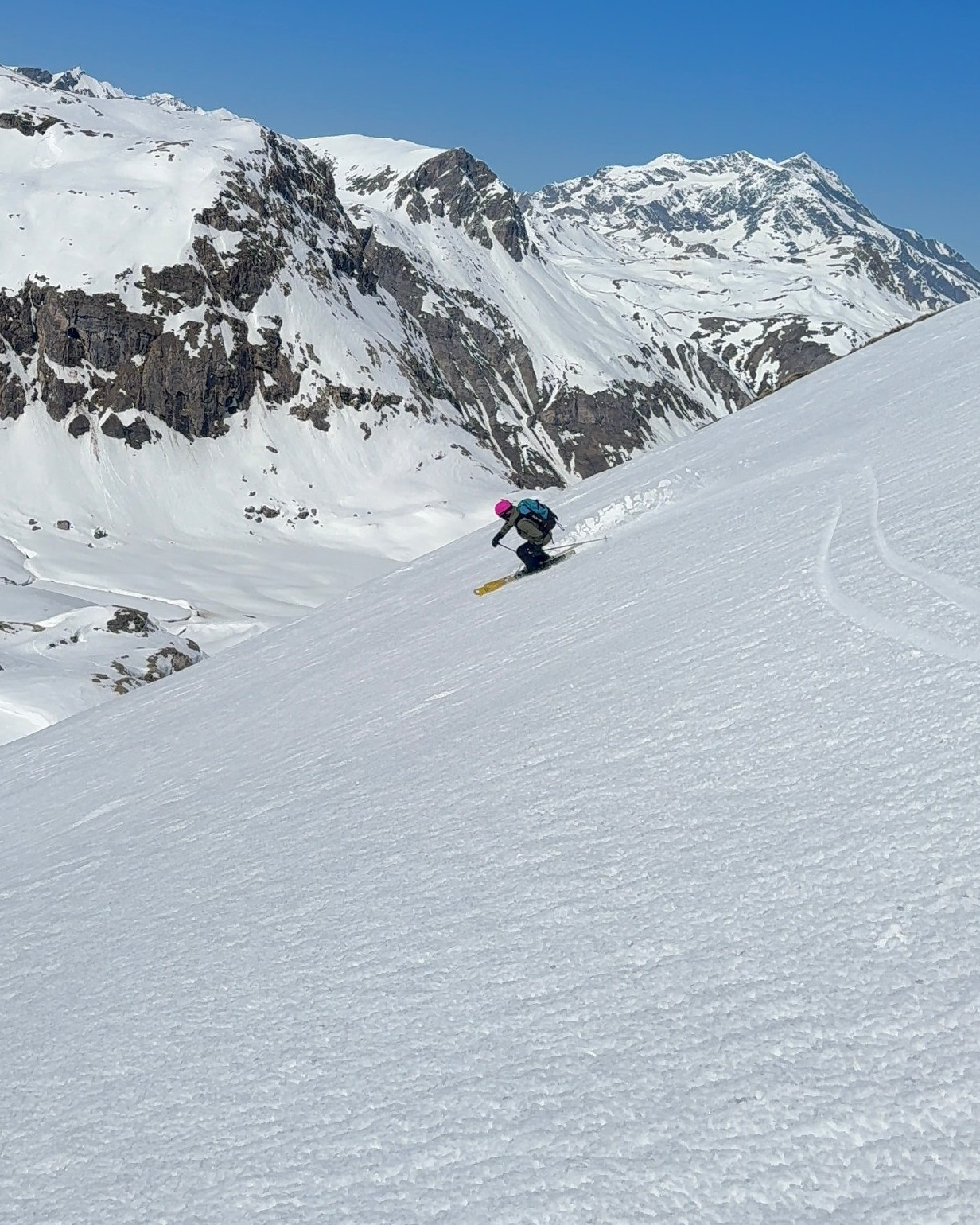
Conditions vary from one year to the next, and from one slope to another. Nothing here replaces a live assessment of the snowpack, the weather and the avalanche forecast, which your instructor carries out and updates throughout the outing.
Why timing and slope matter in spring
Spring snow does not behave the same everywhere. After a night of frost the surface is firm; it then thaws as the day warms up, and when it thaws depends on the slope’s aspect, the sun, the temperature of the day and the wind, which can slow down or limit the thaw. Too early and the snow is still frozen; too late and it can become heavy and wet.
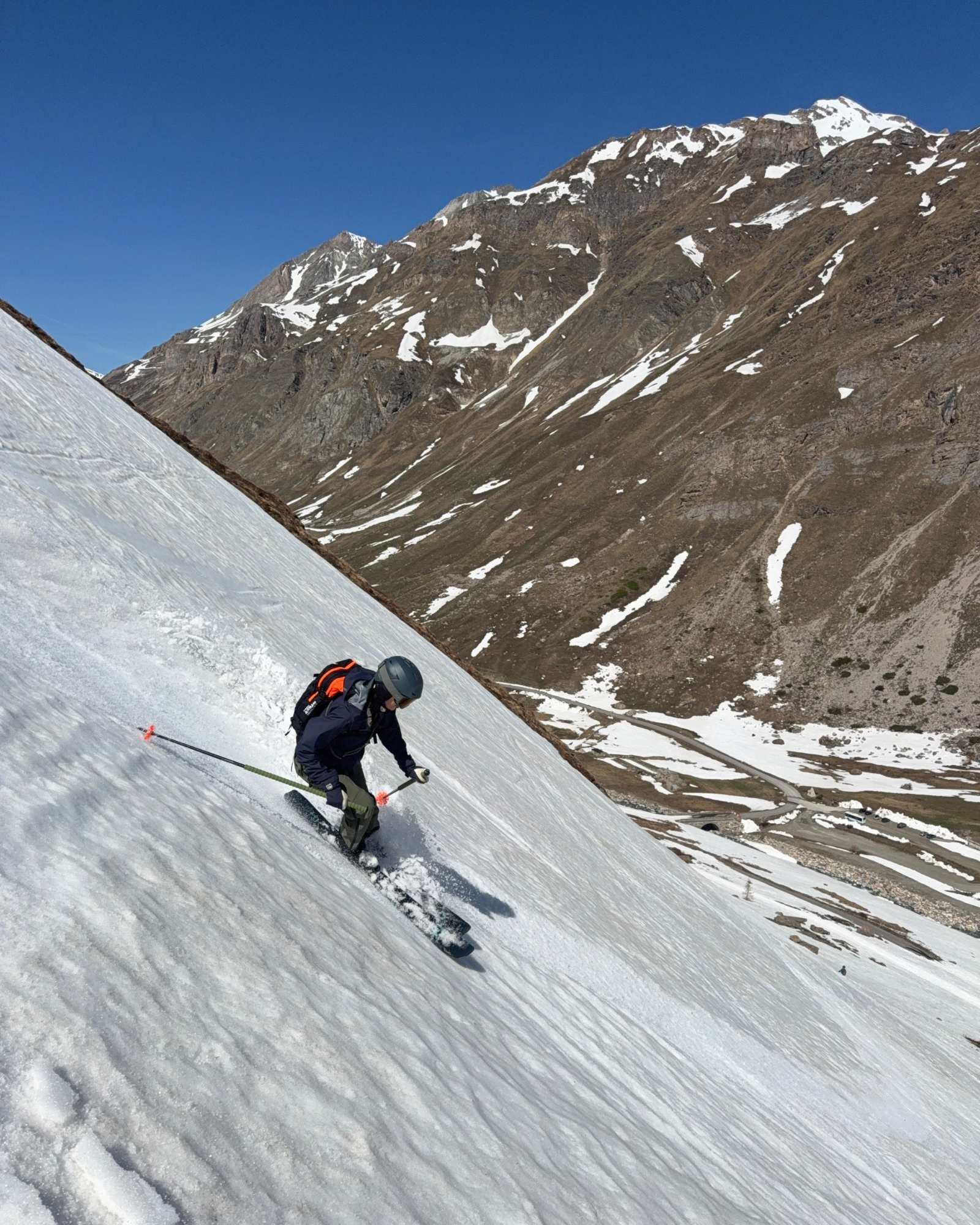
This is where an experienced professional makes the difference. Knowing which slope to climb, which to descend, and at what time, comes from knowing the mountain and watching how it changes. An experienced professional reads how the snow is evolving, taking account of slope aspect, sunshine, the day’s temperatures and wind. The start time, route and descent are adapted accordingly, and the plan may change if conditions do.
What a spring touring day looks like
No two outings are the same, but most follow a familiar rhythm.
- Planning the day. Your instructor reviews the weather, the snow conditions and the avalanche information, then proposes an objective that fits your group.
- An early start. Setting off early is usual in spring, so that the climb and the descent happen at the right time for the snow.
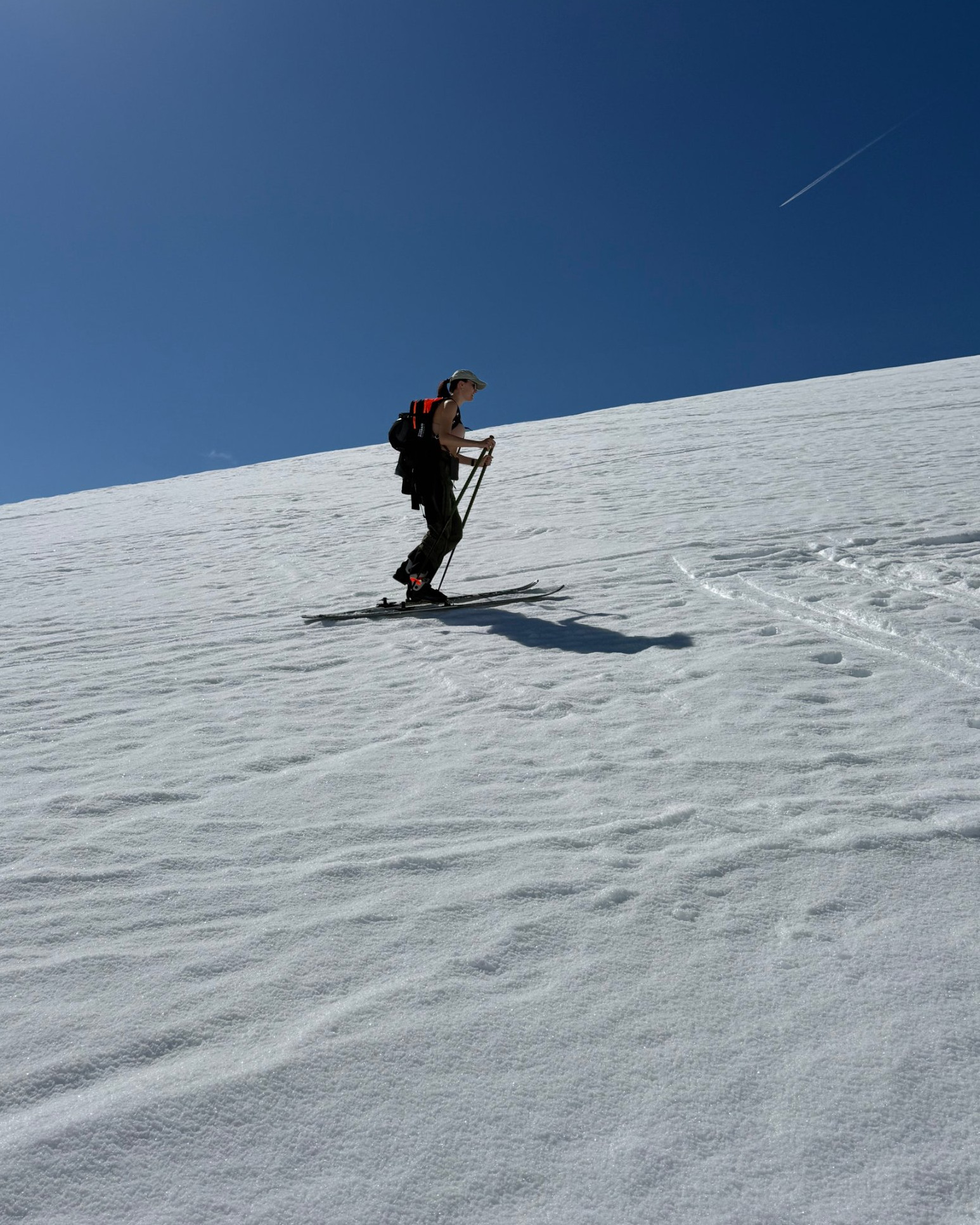
- The climb. Skins on, steady pace. The route is adapted to your fitness and experience, with stops to adjust and rest.
- The summit or turning point. Time to look around, eat, and reassess conditions before the descent.
- The descent. The line is chosen according to the snow and the slope, and may change on the day.
The objective itself can be adjusted, or changed entirely, if conditions call for it.
Instructor or mountain guide?
Depending on the itinerary, your outing is led by a ski instructor or by a UIAGM/IFMGA mountain guide. Glacier terrain itself is the domain of mountain guides, while many tours at altitude, around the glaciers, can be led by a qualified instructor. We tell you which professional is best suited to your project, and why.
Who it suits and what to expect
Spring touring can suit skiers new to ski touring as well as experienced tourers, provided they have the skiing ability and fitness required for the proposed route.
What matters most is a comfortable level on skis in varied snow, and a reasonable level of fitness for a day with an uphill component. Tell us about your experience, your fitness and what you want from the day, and we will propose an outing that fits.
Avalanche safety equipment (transceiver, shovel and probe) is required, and we can help arrange rental of touring equipment depending on what you own and what you need.
What to bring
Spring temperatures can vary considerably, particularly at altitude, and it is often warm by the end of the season. Alongside the required safety equipment, we recommend bringing:
- Sun protection: sunscreen, which is essential at altitude in spring, and a cap, sun hat or visor for the climb.
- Plenty of water: drink regularly, especially during the climb, as dehydration comes quickly in the mountains.
- Layers: lightweight, technical clothing that is breathable and waterproof. On the climb many people take their jacket off and go up in a base layer or a very light jacket, then put it back on for the descent. A spare base layer is useful in case the one you are wearing becomes damp.
- A snack: useful for a break and to help keep your energy levels up.
Lunch on the mountain
Some spring tours last a full day. Depending on the itinerary, lunch may be taken at a mountain refuge serving food, or you may need to bring your own, such as a sandwich. Your instructor or mountain guide will explain the arrangements when you plan your outing together.
The right instructor for your tour
At Val d’Isère Ski Instructors, we do not simply assign the next instructor available. We start with your experience, your objectives, your language and what you expect from the day, then look for a professional from our network whose skills and teaching approach match.
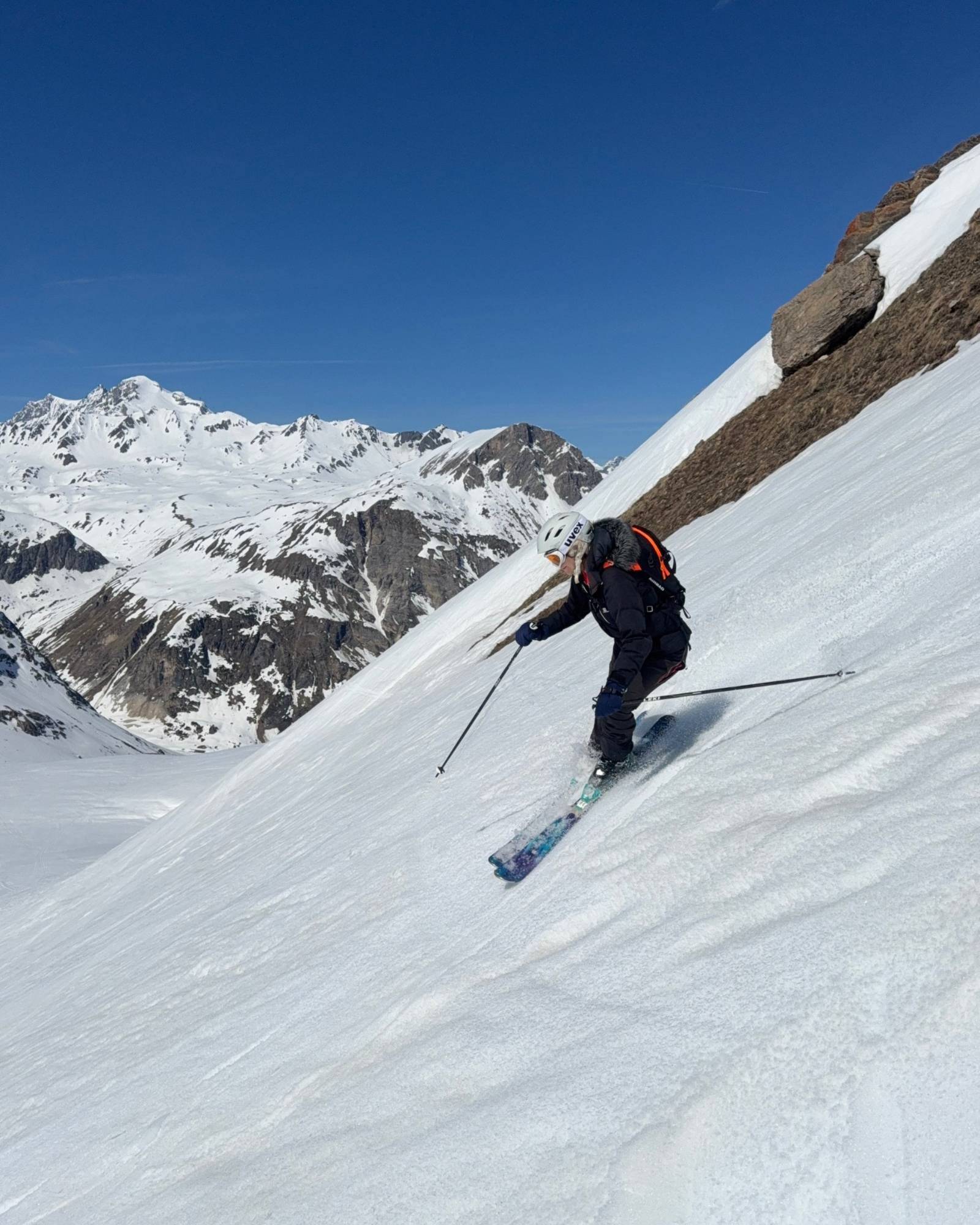
For ski touring, that matters even more: the right person is not only qualified for the activity, but is also a good fit for your pace and your group. The match takes into account your level, your objectives, your language, the professional’s qualifications and availability. Instructors are independent professionals holding the qualifications required for their activity.
Whatever you need for your stay, from transfers and equipment rental to restaurants and accommodation, tell us and we will organise it, depending on availability. Discover our concierge service and our off-piste and freeride page.
Preparing your outing
To plan a spring tour, it helps to know:
- your preferred dates and how flexible you are
- the size and makeup of your group
- your skiing level and any ski touring experience
- your fitness, and how long a day you would like
- the language you want to be guided in
- whether you have your own equipment
Outings are proposed once we have these details, and confirmed according to availability and conditions. Contact us to find out what rates are available for your dates.
For a wider view of the last weeks of the winter, read our article on spring skiing in Val d’Isère and Tignes.
Frequently asked questions
Spring touring can suit skiers new to ski touring as well as experienced tourers, provided they have the skiing ability and fitness required for the proposed route. Tell us about your experience and we will propose an outing that fits.
Snow thaws as the day warms up, and when depends on the slope, the sun, the temperature and the wind. Starting early lets the climb and the descent happen at the right time for the snow.
Alongside the required avalanche safety equipment, we recommend sunscreen, plenty of water, a cap or sun hat, lightweight technical layers and a snack. See the “What to bring” section above.
Some spring tours last a full day. Depending on the itinerary, lunch may be taken at a mountain refuge serving food, or you may need to bring your own, such as a sandwich. Your instructor or mountain guide will explain the arrangements when you plan your outing together.
Depending on the itinerary. Glacier terrain itself is the domain of UIAGM/IFMGA mountain guides, while many tours at altitude, around the glaciers, can be led by a qualified instructor.
We can help arrange rental of touring equipment, depending on what you own and what you need.